


Why Local Knowledge Matters More Than Ever in Metro New Orleans Real Estate
People are using real estate agents more than ever. According to NAR's 2026 Profile of Home Buyers and Sellers, 90% of buyers and 92% of sellers worked with an agent over the past year. Both are record highs.
We're not surprised. And if you've ever tried to buy or sell a home in Metro New Orleans, you probably aren't either.
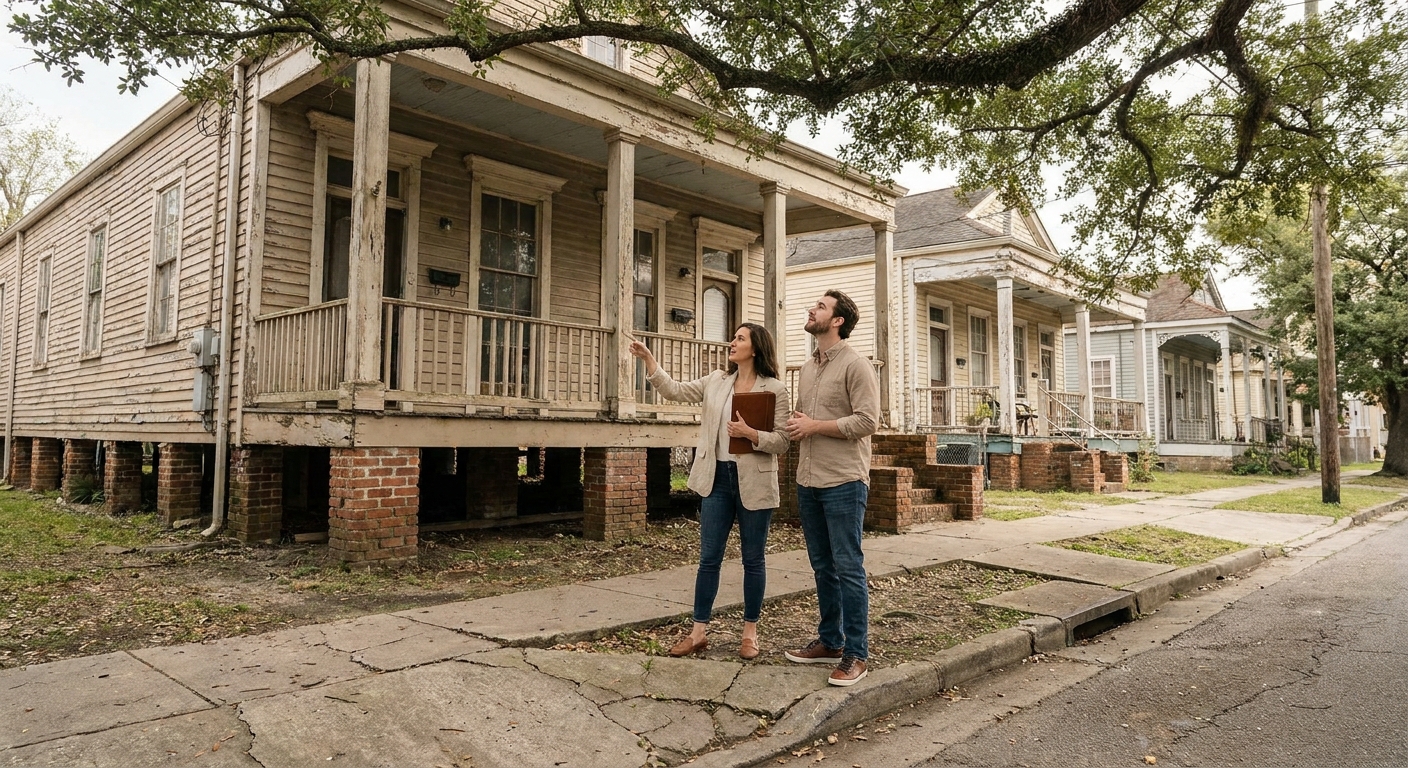
This market has layers. Flood zones that shift from one street to the next. Insurance costs that can catch buyers completely off guard. Homes with decades of character and, sometimes, decades of deferred maintenance hiding behind fresh paint. The information you find online is a starting point, not the full picture. Local knowledge is what fills in the rest.
Key Takeaways
Record agent use nationally: NAR reports 90% of buyers and 92% of sellers worked with an agent in 2025-2026, both all-time highs
Metro New Orleans is genuinely complex: Flood zones, soil conditions, elevation, and insurance costs can shift from block to block
Online listings show you a home; they don't show you what it costs to own one here
Agents notice clues; specialists confirm them: A good local agent flags what deserves a closer look, and licensed inspectors, engineers, and insurers take it from there
Flood coverage is a separate policy from homeowners insurance: Many buyers don't find this out until they're already under contract
Sellers benefit just as much: Knowing what buyers will push back on, and getting ahead of it, affects both your timeline and your outcome
Most people find their agent through referrals: 63% of sellers used someone they'd worked with before or found through someone they trusted
Why Does Local Knowledge Matter in Metro New Orleans?
We say this a lot, and we mean it literally: from block to block, things can be completely different here.
That's not an exaggeration for effect. It's just the reality of living and working in Southeast Louisiana. The flood zone changes. The drainage changes. The soil conditions change. Two homes on the same street can carry very different insurance costs, foundation histories, and long-term ownership considerations. That's not something a Zestimate can tell you.
NAR's research found that 55% of buyers said their agent pointed out features or faults they missed themselves, and 54% said their agent helped them actually understand the process. That tracks with what we hear from our own clients.
We've had buyers come to us after trying to navigate this market on their own, overwhelmed and second-guessing everything. We've had sellers who didn't realize how much preparation work mattered until a deal fell through over something that could have been caught early. What we bring is a combination of market knowledge, transaction experience, and a real eye for the stuff that matters in this specific region.
Lesha leads on strategy: pricing, positioning, neighborhood guidance, and keeping transactions on track when things get complicated. Michael brings hands-on experience with structural conditions, inspections, foundations, and flood-related factors. Together, that covers a lot of ground for our clients, and we've been genuinely grateful for the feedback we've gotten over the years. Lynda Nugent Smith has the knowledge base that is exceptional and a go to if and when we have a challenge that needs feedback. Helping people through something this big, over so many obstacles, has been such a blessing.
How Do Metro New Orleans Areas Differ Day to Day?
One of the first things we ask relocation buyers is: how do you actually want to live day to day?
That question does a lot of work here. Metro New Orleans isn't one market. It's a collection of very different communities, each with its own character, commute patterns, housing stock, and lifestyle feel.
Uptown New Orleans has walkability, beautiful historic architecture, and easy access to Magazine Street and Audubon Park. It also has tight parking, smaller lots, and streets that can flood in a heavy rain. Metairie gives you more space, more suburban ease, and simpler commutes toward the airport corridor. Algiers Point offers river views and a quieter pace with ferry access to downtown. The Northshore communities like Mandeville and Covington have larger lots and newer construction, but crossing the Causeway every day is a real consideration.
None of those are wrong choices. They're just different lives. The right one depends on your work, your family, and how you spend your time.
A few other things worth knowing before you search:
Historic districts: New Orleans has 14 residential historic districts regulated by the Historic District Landmarks Commission. Exterior changes to historic homes in these areas typically require HDLC review before permits are issued, which affects both timelines and renovation budgets.
Commute realities: River crossings, drawbridges, and limited routes make commutes here genuinely different from most cities. We always recommend driving your actual route at your actual time before you decide.
Older housing stock: A large portion of Metro New Orleans homes were built before 1970. That can mean charm and character, but it also raises specific questions about electrical systems, plumbing, roof age, and what has or hasn't been updated with proper permits.
How Can Flood Risk Change the True Cost of a Home?
This is probably the conversation we have most often, and it's the one where buyers are most frequently caught off guard.
Here's the thing a lot of people don't know going in: homeowners insurance and flood insurance are two completely separate policies. A standard homeowners policy does not cover flood damage. In Southeast Louisiana, flood coverage is not a nice-to-have for most buyers with a mortgage. The Louisiana Department of Insurance recommends getting quotes early, and we'd say the same.
Your flood zone still matters, especially for lender requirements and local floodplain rules. But under FEMA's current rating system, two homes in the same zone can carry very different flood insurance premiums based on factors like elevation, foundation type, and distance to water. Shopping that out early is part of understanding what a home actually costs to own.
What to Check | Why It Matters | Who Verifies It |
|---|---|---|
FEMA flood zone map | Affects lender requirements and local regulations | Floodplain administrator or lender |
Elevation certificate | Documents building elevations used for insurance rating | Licensed surveyor |
Seller disclosures and drainage observations | Surfaces questions that need investigation | Seller disclosure; inspector |
Written insurance quotes | Real coverage, real cost, real exclusions | Licensed insurance agent |
We try to get our buyers to real insurance numbers, not rough estimates, before they're too far into a decision. That gap between what someone assumes and what a quote actually says can completely change the math on a home.
What Property Clues Deserve a Closer Look?
Michael's background means we walk through homes differently than most. We're not inspectors, and we're clear about that. But experience teaches you to notice things.
Sticking doors. Cracks at door frames or where walls meet the ceiling. Floors that aren't quite level. Water staining near windows or at the base of interior walls. A roof that looks patched rather than replaced. These aren't automatic dealbreakers. They're questions, and they're the kind that a licensed inspector or structural engineer can actually answer.
Southeast Louisiana adds a layer here. Much of the region sits on organic soils that compress and shift over time, something NOLA's hazard mitigation resources identify as a contributor to subsidence, which is the gradual sinking of ground or structures. That doesn't disqualify a home. It just means foundation and drainage observations are worth taking seriously, not skipping.
For sellers, the same awareness works in your favor. Knowing what buyers are going to scrutinize, and being able to document what's been done, reduces friction later and keeps deals from unraveling over things that could have been addressed upfront.
How Does Local Expertise Help Metro New Orleans Sellers?
Sellers come to us asking what they should fix before listing. The honest answer is always: it depends.
Not every repair produces a return. A new roof is different from updated landscaping. A reliable HVAC system is different from a full kitchen renovation. We walk through homes with sellers and help focus on what will actually matter to buyers, reduce inspection surprises, and protect the deal, rather than spending money on updates the market won't reward.
Pricing is the other half. Metro New Orleans has micro-markets within micro-markets. What sold last month two streets over may or may not be a valid comparison to your home, depending on flood zone, condition, lot size, and historic district status. Getting that comparison right matters a lot.
87% of sellers in NAR's survey said their agent managed most aspects of the sale. That's what we aim for: preparing the home, pricing it well, and knowing what buyers in this market are going to ask before they ask it.
How Should You Choose a Local Real Estate Agent?
Most people still find their agent through someone they know. That's not an accident. Trust is hard to fake, especially in a transaction this size.
When you're evaluating someone, here's what's worth asking:
Do they know your specific area? Not just New Orleans in general, but the neighborhoods and parishes you're focused on
Can they speak to property conditions? Older homes, flood-related factors, and what's common in a given area
Do they have good specialist relationships? Inspectors, engineers, insurers, and surveyors who can back up what they notice
Will they communicate clearly? Not assume you already know the process
Are they transparent about their services and compensation? Louisiana's buyer agreement requirement, effective August 19, 2024, means buyers review and sign an agreement before working with an agent. Understand what you're agreeing to.
We're happy to walk you through how we work. No pressure, just a straight conversation. Reach out anytime at www.Metro-New-Orleans.com.
Frequently Asked Questions
When Should Buyers Request Homeowners and Flood Insurance Quotes?
Before making an offer when possible, and no later than the first few days of your inspection period. Real quotes give you a real picture of what the home costs to own.
Does Flood Zone X Mean a Home Has No Flood Risk?
No. Flood Zone X means the home falls outside the high-risk area on FEMA's current map, but flooding can still happen, and shaded versus unshaded X zones carry different risk levels.
Can a Real Estate Agent Identify a Foundation Problem?
An experienced agent can notice clues worth investigating, but diagnosing the cause or extent of a foundation issue requires a licensed inspector or structural engineer.
Should Sellers Repair Every Issue Before Listing?
Not necessarily. The focus is on repairs that affect buyer confidence, trigger inspection objections, or create safety concerns. A local agent can help you decide what's worth addressing and what isn't.
Do Buyers Need a Written Buyer Agreement in Louisiana?
Yes. Louisiana's buyer agreement requirement took effect August 19, 2024. Buyers review and sign an agreement covering services, duration, and compensation before working with an agent. Read it carefully and ask questions.
Check out this article next